
Currently Empty: $0.00



Study & Exams
Top Ten Tips To Better Examination Preparation
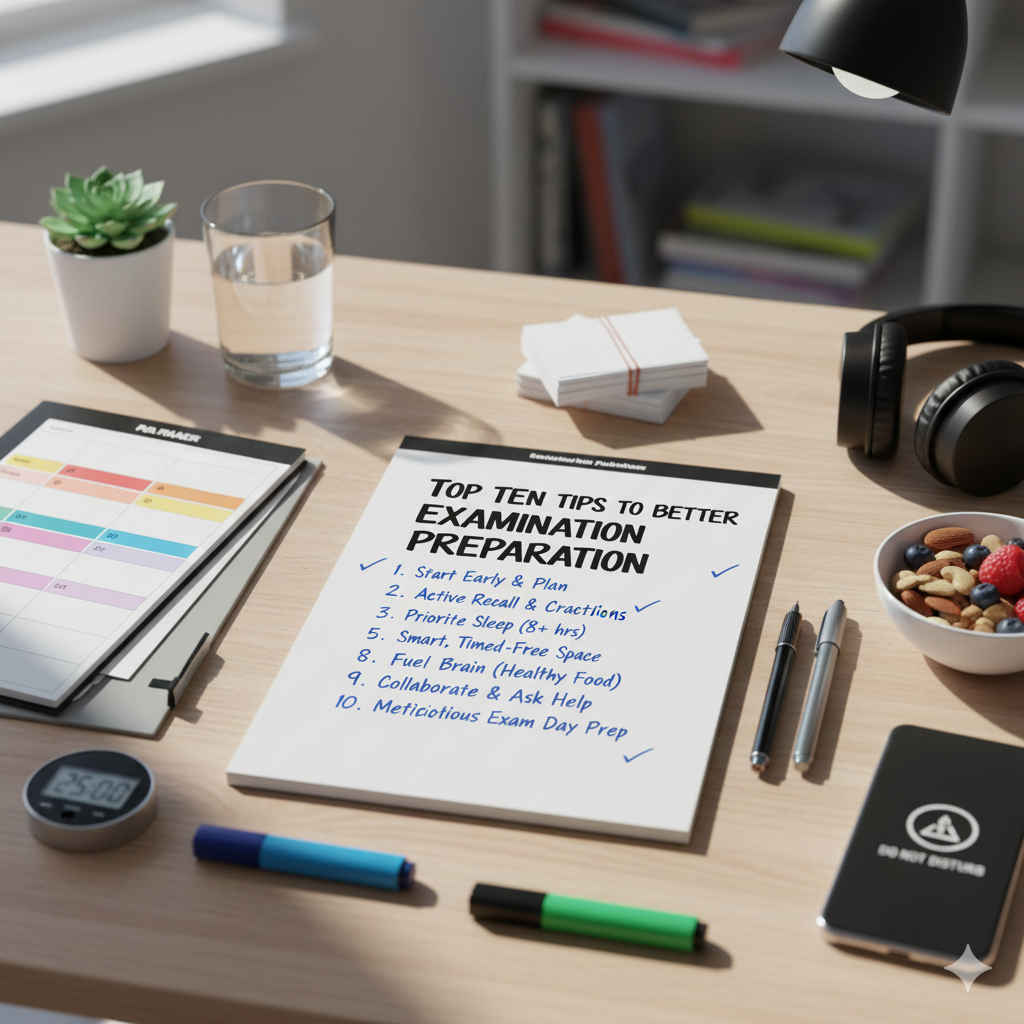
Here are the top 10 tips for better examination preparation, distilled from expert advice. I’ve included the science behind each tip to explain why it works so you can apply them effectively.
Top 10 Exam Preparation Tips
Tip 1: Start Early & Plan Strategically
Why It Works:Cramming overloads short-term memory, increases anxiety, and is counterproductive for long-term recall . Spacing out your study over several days or weeks—a technique called “distributed practice” helps you learn information more deeply and retain it longer .
How to Do It:Create a realistic study timetable 3–4 weeks in advance, breaking material into daily, manageable chunks . Prioritize subjects by difficulty and exam dates, and use digital calendars to block dedicated study periods .
Tip 2: Use Active, Not Passive, Study Techniques
Why It Works:Passively re-reading notes or highlighting text is a weak learning strategy . Active learning forces your brain to engage with, process, and reconstruct the material, leading to stronger memory formation .
How to Do It:Try methods like teaching the concept to someone else (or even a pet/picture), creating flashcards for self-testing, making mind maps to connect ideas, or working through practice problems .
Tip 3: Simulate Real Exam Conditions
Why It Works:Practicing under timed, exam-like conditions builds mental stamina, improves time management, and reduces anxiety by making the real test feel familiar .
How to Do It:Use past exam papers, set a timer, and work in a quiet space without notes or aids . This will help you identify knowledge gaps and get used to the pressure.
Tip 4: Prioritize Sleep & Never Cram All-Night
Why It Works:Sleep is critical for memory consolidation the process where short-term memories are stabilized into long-term storage . All-nighters impair concentration, increase stress, and sabotage your recall ability .
How to Do It:Aim for 8–10 hours of sleep, especially the night before the exam . Avoid caffeine late in the day and establish a consistent sleep schedule during your study period .
Tip 5: Take Smart, Scheduled Breaks
Why It Works:The brain’s focus and energy deplete over time. Regular breaks refresh your mind, prevent burnout, and can actually improve productivity and retention .
How to Do It:Use a technique like the Pomodoro method: study intensively for 25 minutes, then take a 5-minute break. After four cycles, take a longer 15–30 minute break . Use breaks to stretch, hydrate, or take a quick walk .
Tip 6: Organize Your Distraction-Free Study Space
Why It Works:A cluttered or distracting environment forces your brain to multitask, which severely reduces learning efficiency and the quality of your study session .
How to Do It:Find a quiet, well-lit space and keep your study materials organized . Put your phone on “Do Not Disturb” or leave it in another room, as even its presence can reduce focus .
Tip 7: Fuel Your Brain & Body
Why It Works:What you eat and drink directly impacts energy levels and cognitive function. Proper nutrition provides sustained energy, while dehydration or sugar crashes can impair focus .
How to Do It:Eat “brain foods” like berries, nuts, whole grains, and foods rich in omega-3s . Stay hydrated with water and eat a balanced meal before studying and on exam day .
Tip 8: Manage Stress & Your Mindset
Why It Works:High anxiety can block your ability to recall information you know. Managing stress keeps your mind clear and improves performance .
How to Do It:Practice deep breathing or meditation . Replace negative thoughts (“I’ll fail”) with positive affirmations (“I am prepared”) . Remember that mistakes are learning opportunities .
Tip 9: Collaborate and Seek Help
Why It Works:Studying with peers allows you to quiz each other, explain concepts (reinforcing your own understanding), and fill in gaps in your notes . Asking for help when stuck prevents small confusions from becoming big problems.
How to Do It:Form a study group, attend professor office hours or review sessions, or work with a tutor on difficult topics .
Tip 10: Prepare Meticulously for Exam Day
Why It Works:Reducing last-minute logistical stress helps you stay calm and focused, allowing you to perform at your best .
How to Do It:The night before, gather all required materials (ID, stationery, calculator) . Plan your route, set multiple alarms, and lay out your clothes . Eat a healthy breakfast and arrive early to settle in .
Tailoring Your Approach
The most effective study method depends on your personal learning style and the exam format.
For different learners: Visual learners benefit from mind maps and color-coded notes. Auditory learners can try recording notes to listen to. Kinesthetic learners should use hands-on methods like flashcards or teaching others.
For different exams: Multiple-choice tests often require knowing definitions and concepts, while essay exams test your deeper understanding and ability to connect ideas . Always clarify the test format with your teacher if possible .
I hope this structured guide gives you a clear and effective plan for your exam preparation. If you’d like to dive deeper into a specific technique, such as creating a study schedule or practicing mindfulness, feel free to ask.