
Currently Empty: $0.00



Study & Exams
Top Ten Tips To Better Health During Examination
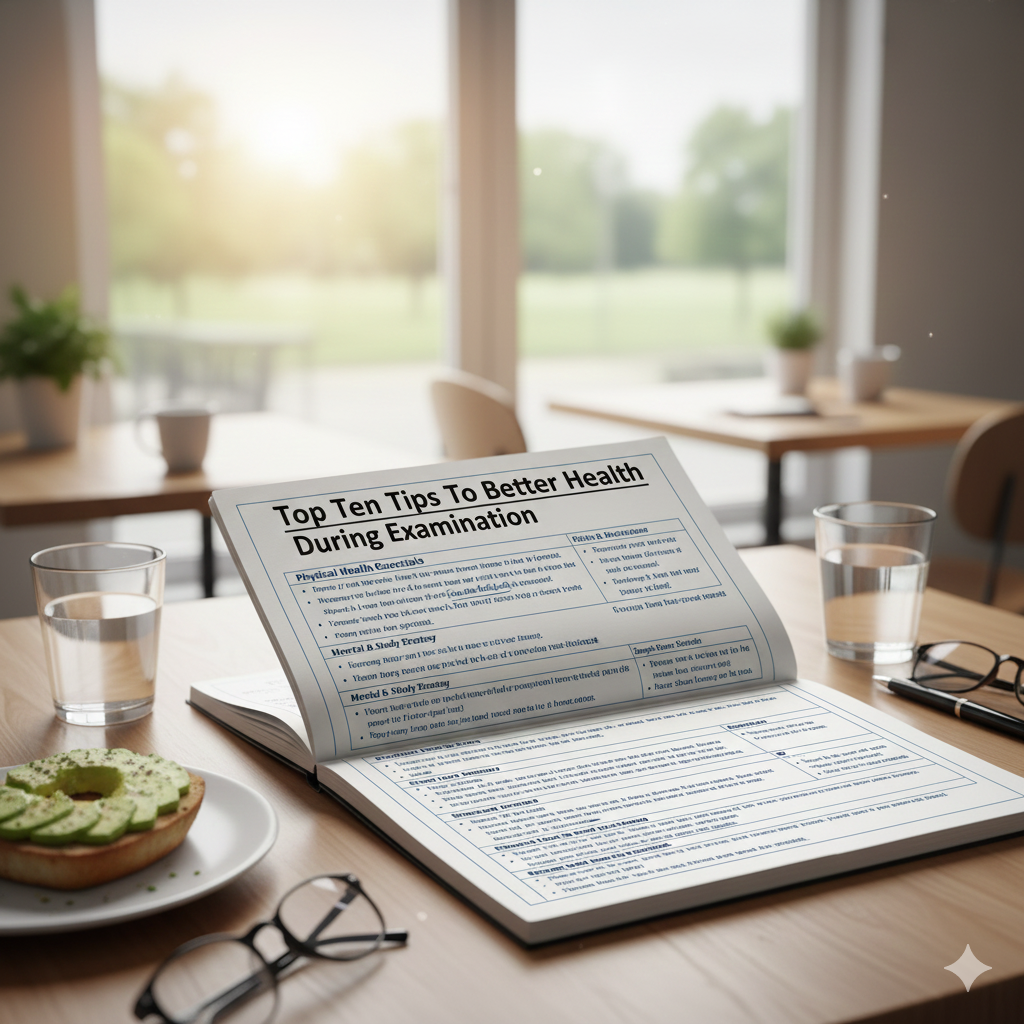
Prioritizing your health is key to performing your best during exams. The following table organizes the most effective tips into four core areas, ensuring you can maintain both your physical and mental well-being.
Physical Health Essentials
- Prioritize Quality Sleep: Aim for 7-9 hours per night. Avoid cramming all night, as a rested brain is better at thinking clearly, managing stress, and recalling information.
- Stay Hydrated: Drink plenty of water (about 2-3 liters daily). Even mild dehydration can impair focus and cognitive performance. Balance caffeine intake by drinking water to prevent jitters and crashes.
- Fuel Your Body with Healthy Food: Eat nutrient-rich “brain foods” like nuts, seeds, avocados, and whole grains. Start your exam day with a healthy breakfast of complex carbs and protein. Avoid too much sugar to prevent energy crashes.
- Incorporate Movement: Take short breaks to move—even a 5-minute walk or some stretching helps. Regular exercise releases endorphins (natural stress relievers) and improves concentration.
Mental & Study Strategy
- Plan and Organize Your Time: Create a realistic study schedule that breaks large topics into smaller chunks. This structure reduces anxiety and helps you feel in control.
- Take Regular, Smart Breaks: Use a technique like the Pomodoro method (study for 50 minutes, break for 10) or similar intervals. Breaks refresh your mind and improve focus, while trying to study for hours on end is ineffective and can make you feel more anxious.
- Distinguish Work Time from Rest Time: Commit fully to focused study sessions, then completely disconnect during your breaks to relax or do something enjoyable. This “switch off” time is crucial for recovery.
Stress Management & Support
- Use Quick Calming Techniques: If you feel overwhelmed, try a simple breathing exercise: breathe in for 4 counts, hold for 2, and breathe out for 7. This can quickly calm your nervous system.
- Seek Support and Connect with Others: Don’t isolate yourself. Talk to friends, family, or classmates. For academic struggles, ask teachers for help or use available tutoring resources.
- Be Kind to Yourself and Keep Perspective: Maintain a positive mindset, celebrate small wins, and practice self-compassion. Remember that grades do not define your worth, and this stressful period is temporary.
Putting It All Together
The key is to integrate these tips into a balanced routine. To see what a healthy exam day might look like, here is a sample schedule that brings these principles together:
Sample Exam Day Schedule
- Morning: Eat a healthy breakfast and drink water. Go for a short walk to the exam venue if possible.
- Before the Exam: Use a short ritual like breathing exercises or positive visualization to calm your nerves and build confidence.
- After the Exam: Resist the urge to dwell on it or compare answers. Focus on relaxing and preparing for the next one.
- Evening: Prioritize rest and a healthy meal to recharge, rather than starting intense new study sessions.
I hope these tips help you feel your best during your exams. If you’d like more detailed advice on any specific tip, like creating a study schedule or relaxation techniques, feel free to ask. Good luck